
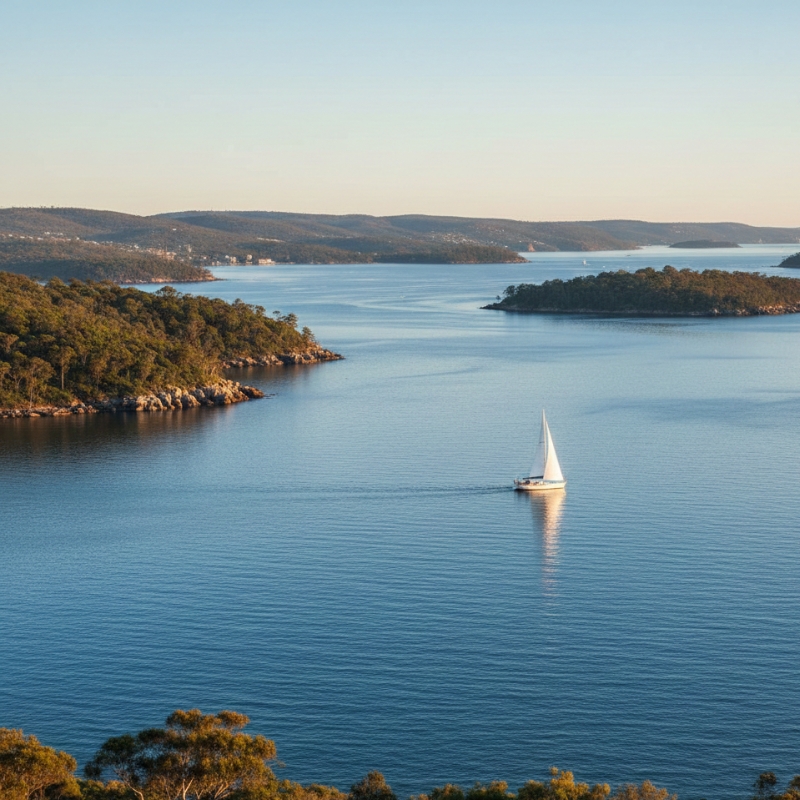
Pittwater is one of those rare Sydney pockets that feels like it was designed for unhurried days: sheltered water, national park bushland dropping straight to the shoreline, and little bays that seem to invite you to slow down. It’s close enough to do on a whim, but varied enough that you’ll want a plan so you’re not just drifting around wondering what’s next.
Below is a local-style blueprint for a “perfect day” on Pittwater, with flexible options depending on who you’re with, what the wind is doing, and whether you want more swimming, more exploring, or more sunset magic.
First Decision: Bareboat or Skippered Charter?
If you have the required sailing or add general boating skills and experience, a bareboat charter lets you take control and skipper the yacht yourself. Alternatively, a skippered charter offers a stress-free option—allowing you to relax, enjoy the experience, and have a few drinks while a professional handles the boat.
Checking the Weather
Before you lock in your route, check the marine forecast for Sydney’s enclosed waters (it covers areas including Pittwater). You’re not looking for perfection — just context.
A simple, reliable place to check is the Bureau of Meteorology’s Sydney Enclosed Waters forecast.
What you’re really trying to answer
- Will it be calmer early, then breezier later (common on warm days)?
- Is there a southerly change due that could make the afternoon choppy and cooler?
- Are there warnings or conditions that suggest scaling back your plan?
Q: What’s the best time of day for calm water on Pittwater?
Early morning is usually the smoothest. On many summer days, the breeze builds later (often a north-easterly), which can add chop across open stretches. If you want an easier ride and an unhurried swim, plan your “big movement” earlier and leave the afternoon for tucked-away bays.
The “perfect day” itinerary at a glance
You can choose a full-day, multi-day, or week-long charter, and the classic local flow depends on your selection. Think of Pittwater as a choose-your-own-adventure—this core itinerary keeps things relaxed, with plenty of time to stop and enjoy each location.
Option 1: The relaxed “scenery + swims” day
This is the crowd-pleaser: minimal rushing, maximum “why don’t we do this every weekend” energy.
Morning: cruise into the calm and pick your first bay
Start with a gentle run past the southern Pittwater scenery (Scotland Island always feels like a mini getaway), then choose your first stop based on conditions and comfort.
Good “settle in” areas often have:
• Protection from the wind direction
• Enough room to relax without feeling like you’re in the middle of everyone’s day
• Easy water access for a quick dip
Q: Is Pittwater beginner-friendly?
Yes — especially because it’s sheltered compared to open-coast boating. The main thing is to keep your plan conservative, stay alert for traffic near popular areas, and choose bays that suit the day’s wind.
Late morning: Scotland Island moment
Even if you don’t stop, a slow pass around Scotland Island is a Pittwater rite of passage. It’s quiet, green, and distinctly “not-the-city”, even though you’re still in Sydney.
If you do stop nearby, keep it simple:
• Take a short break
• Hydrate and apply sunscreen again (this is where the day usually gets people)
• Have a quick check-in on how the breeze is trending
Lunch: the “don’t overthink it” picnic
A perfect Pittwater lunch is usually:
• Something that doesn’t require juggling plates in the wind
• A cooler bag with plenty of water
• Fresh fruit and easy snacks for the afternoon swim
Local-style choices:
• Wraps/sandwiches you can eat one-handed
• A big salad you can serve from one container
• A grazing box you can pack away quickly if the breeze picks up
Afternoon: choose a second, more tucked-away bay
As the day warms up and boat traffic increases, the best move is to pick a bay that feels a little removed — somewhere you can float, chat, and let the afternoon roll.
If you’re with a mixed group (some swimmers, some loungers), aim for:
• A comfortable swim zone where people can hop in and out
• A plan for shade (bimini, hats, or a portable shade setup if appropriate)
• A short “pack-down” routine so the return trip isn’t chaos
Late arvo: slow cruise back for golden hour
This is when Pittwater looks unreal. The light hits the water, the bushland turns golden, and everything feels calmer again.
If you like having one page you can refer back to for the big-picture options and logistics, the Pittwater boat hire guide is a handy companion to this itinerary.
Option 2: The family-friendly Pittwater day
This version is about simpler stops, fewer transitions, and a rhythm that works with kids (or anyone who likes predictability).
The family formula
- One main destination bay
- One secondary “bonus” stop if energy is high
- Early lunch (before people get hangry)
A clear “home time” before late arvo tiredness hits
What makes a family stop “good”
- Easy water access for supervised swims
- Less exposure to strong wind and wash
- Space to reset: snacks, shade, towels, and a calm routine
A simple kid-proof packing list
- Two sets of towels per child (one always ends up soaked early)
- Rashies and hats (the sun reflection gets you)
- Extra snacks you don’t mind getting sandy
- Refillable water bottles
- A “warm layer” for the run home if it cools down
- A small dry bag for phones/keys
One small thing that makes family days feel dramatically easier is deciding your “main bay” first, then working backwards from the conditions — this is exactly why it helps to plan your Pittwater boating day around the forecast and your group’s comfort, not a strict checklist of stops.
Option 3: The sunset-focused “late start” day
Not every perfect Pittwater day needs a dawn start. If you’re aiming for golden hour, keep the earlier part light and leave yourself a margin.
How to make a late start and still feel relaxed
- Choose one primary bay for a long stop
- Keep food simple (pre-prepped and easy to pack away)
- Don’t plan too many “must-see” points
Q: What’s the biggest mistake people make when planning a Pittwater sunset session?
Trying to squeeze in too many stops. Sunset days are best when they’re slow: one great swim, one great snack, one great cruise as the light changes.
Local know-how that makes the day feel effortless
These are the small details that separate a “nice day” from a “wow, that was perfect” day.
Time your movement, not just your stops
If the forecast suggests the breeze will build, do your longer cruising earlier and save the tucked-away bays for later.
Use a simple “comfort check”
Every hour or so, ask:
• Is everyone still warm enough / cool enough?
• Do we have enough water?
• Is the sun protection still happening?
• Is the wind trending up?
Small adjustments early prevent the late-afternoon scramble.
Choose moorings and anchoring spots thoughtfully
Pittwater has many popular bays where people use public moorings or anchor to enjoy the area. Public moorings are often easier and faster than dropping anchor. The basic local etiquette is:
Don’t crowd someone who’s already set up
Keep your wash down near beaches, shorelines, and other boats
Be patient — most Pittwater conflict is just people misjudging distance and drift
Respect the shoreline and wildlife
Pittwater edges into national park and sensitive foreshore areas. Keep the vibe clean:
Take all rubbish with you (including tiny plastics and bottle tops)
Avoid loud music carried into quiet bays
Keep an eye out for birds and marine life — especially when moving off from a stop
What to pack for a genuinely perfect Pittwater day
This is the practical list locals build over time.
The “non-negotiables”
- Plenty of drinking water
- Sun protection: sunscreen, hat, sunglasses
- Light layers (even in summer, the run home can cool off)
- Towels + a dry bag for valuables
- Bring your own food. If you’ve chosen the BBQ option, stick to quick-cooking items like kebabs or chicken fillets. Large cuts of meat can be tricky on a marine BBQ
- You or your skipper should check wind direction and choose a sheltered bay protected from the breeze.
Nice-to-haves that feel very Pittwater
- A proper picnic blanket (for a quick shore stop where permitted)
- A small speaker at low volume (if you’re in a busier area, not a quiet bay)
- A floating mat or pool noodle for long swim breaks
- A thermos for tea/coffee if you’re doing shoulder season
- Local secret: there’s a colony of seals in Pittwater — our skippers know where to find them
Q: How much water should we bring?
More than you think. Between sun, salt, swimming, and breeze, dehydration sneaks up fast. If you’re unsure, err on the side of extra — and start sipping early, not when everyone’s already thirsty.
A simple “conditions change” plan (so you don’t get caught out)
Even on a beautiful day, Pittwater can shift. The perfect day includes a calm Plan B.
If the wind builds earlier than expected
- Swap to a more protected bay
- Shorten the “cruise” section and extend the “stop” section
- Start the trip back earlier while everyone’s still comfortable
If cloud or drizzle rolls in
- Add layers sooner than you think
- Reduce time spent wet (long swims feel colder faster)
- Keep food warm-ish and easy (this is where a thermos becomes elite)
If it’s busier than expected
- Choose patience over squeezing in
- Give other boats more room than you feel you “need”
- Treat the day like a slow lane, not a race
If you want extra context on shaping the day to your crew (beginner-friendly pacing, comfort triggers, and the “what if the breeze builds” decisions), Pittwater sailing and boating options are a useful reference alongside this local itinerary. This link is to our Pittwater boats – not a reference guide
FAQ
What’s the easiest way to plan a Pittwater route?
Pick one “main bay” you’d be happy spending most of the day in, then add one optional extra stop if conditions stay calm. That approach avoids overcommitting and keeps the day feeling relaxed.
What are the best bays to visit in Pittwater?
Popular spots include Mackerel Beach, The Basin, Coasters Retreat (Carrawong area), and the Bay of America, depending on conditions and time.
What are the must-see spots in Pittwater?
Popular highlights include Scotland Island, The Basin, Barrenjoey Lighthouse, and Lion Island—each offering a different Pittwater experience.
What should we do if the afternoon gets choppy?
Move to a more protected area, shorten travel legs, and head back earlier. The goal is comfort and safety, not ticking off every spot.
Can you reach Ku-ring-gai National Park on a yacht or catamaran?
Yes—on a full-day charter. Ku-ring-gai National Park is too far to reach comfortably on a half-day yacht charter, but it’s achievable with a full day on the water.