TLDR: The best of Sydney Harbour is on the water, not beside it. The islands, the boat-access beaches and the anchorages are what separate a harbour day from a city day, and several of the best spots have no road to them at all.
Most guides to Sydney Harbour are really guides to the places you can drive to. They send you to the Opera House, Circular Quay and a lookout, which are all worth seeing and all seen by everyone. The harbour itself is sixty-odd kilometres of foreshore, a national park spread across islands and headlands, and a string of beaches that only open up if you arrive by boat.
We have been running charters out here for over two decades. This is the version we would give a friend, organised the way you would actually move through it.
The Islands
Sydney Harbour has a handful of islands, most of them inside Sydney Harbour National Park, and the access rules differ for each one. Getting this right saves a wasted trip.
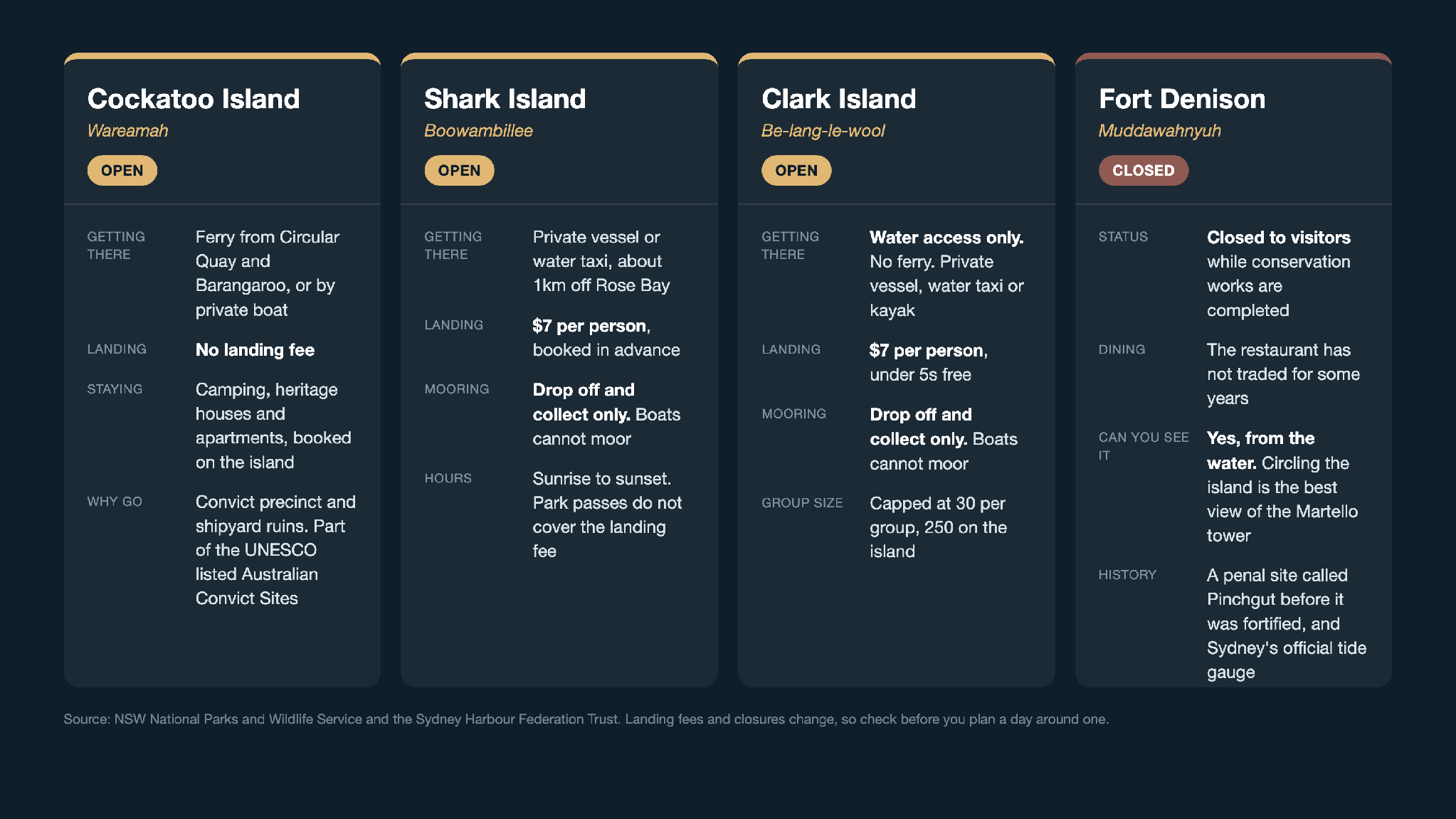
Cockatoo Island, Wareamah, is the big one, and the only harbour island you can stay overnight on. A convict penal establishment first, then a shipyard and naval dockyard for a century and a half, it is now managed by the Sydney Harbour Federation Trust with camping, heritage houses and apartments bookable on the island. It is also part of the UNESCO World Heritage listed Australian Convict Sites, a property covering eleven convict sites across the country, of which the Cockatoo Island Convict Site is one. Ferries run from Circular Quay and Barangaroo.
Shark Island, Boowambillee, sits about a kilometre off Rose Bay and is the pick for a picnic. It is open sunrise to sunset, there is a $7 per person landing fee payable through National Parks and bookings are essential. Private vessels can drop off and pick up but cannot moor there, which is worth knowing before you plan the day around it. Annual park passes do not cover the landing fee.
Shark Island is a small harbour island with grassy picnic areas, a gazebo, sheltered tables, swimming spots and spectacular 360-degree views stretching from the Harbour Bridge and Opera House to Manly and Sydney Heads. Its hand-built foreshore grottos date from the early 1900s, and the island also holds a special place in sailing history—the first Sydney to Hobart Yacht Race started from its shores on Boxing Day 1945.
Clark Island, Be-lang-le-wool, off Darling Point, is water access only. There is no ferry, so the island is reachable only by private boat or a licensed operator, and the same drop-off-but-no-mooring rule applies. It takes small groups rather than crowds, which is exactly why people like it. Clark Island is a peaceful green retreat with grassy picnic areas, a rocky foreshore and impressive views of the Opera House, Harbour Bridge and surrounding eastern suburbs. It was named after First Fleet officer Lieutenant Ralph Clark, who attempted to establish a vegetable garden there in 1789—although much of his produce was reportedly stolen before it could be harvested.
Fort Denison, Muddawahnyuh, the Martello tower on the rock in the middle of the harbour, is the one most guides still get wrong. It is currently closed to visitors while conservation works are completed, and the restaurant has not traded for years. For now the only way to see it is from the water, circling the tower, which honestly is the better photograph anyway. It has been Sydney’s official tide measurement point since the 1850s. Fort Denison began as a penal site called Pinchgut before being developed into a harbour defence facility during the 1800s. Its distinctive sandstone Martello tower is one of the most complete remaining examples in the world.
Goat Island: Known as Me-Mel by the local Cadigal people, Goat Island is a culturally significant harbour island once inhabited by Bennelong and Barangaroo. During the 1800s it housed convict work gangs and a gunpowder storage depot, including the convict-built Queen’s Magazine, which still stands today. The island later became home to Sydney’s first water police station and harbour fire brigade before serving as a shipyard.
There are several other smaller islands including Snapper Island & Spectacle Island west of the harbour bridge near Cockatoo Island. Lastly, there are 2 islands that urban development has swallowed into the shore line including Garden Island, the naval base near Wooloomooloo, and Darling Island near Darling Harbour.
The Beaches You Can Only Reach By Boat
This is the part of the harbour almost nobody sees – these amazing beaches..
Three small beaches sit near the old Quarantine Station at North Head, and all three are effectively boat access only: Store Beach, Quarantine Beach and Collins Beach. Clear water, dense bush behind the sand, and on a weekday you may well have one to yourself. You would not believe you were thirty minutes from the city.
Castle Rock on the northern shore is the other favourite. The water is shallow enough that a catamaran can anchor close to the beach, with Chinamans Beach across the water and Clontarf around the point. Athol Bay, just east of Taronga Zoo, is the anchorage with the view. You will usually find boats sitting there in the late afternoon looking straight back at the city skyline, and if you are timing an evening around sunset, that is where you want to be. Taylors Bay is surrounded by bush and just around the corner. Milk Beach in the east is the quieter alternative. We have written about these in more detail in our guide to the harbour’s hidden beaches.
The well-known ones are still worth your time. Shark Beach at Nielsen Park reopened after the seawall rebuild and the kiosk is back. Balmoral and Camp Cove are both excellent and both easy to reach by road, which is the trade-off. Clifton Gardens, which sailors know as Chowder Bay, has a swimming enclosure and bush all the way around it, and gets overlooked by anyone arriving on foot.
The Foreshore Walks
If you would rather be on your feet, the harbour walks are among the best urban walking in the country.
Spit Bridge to Manly is the classic, half day through bushland, past Clontarf, Castle Rock and Grotto Point Lighthouse, with the lookouts at Dobroyd Head on the way and a cold drink at Manly Cove at the end. Middle Head packs harbour views, Aboriginal heritage sites, nineteenth century military fortifications and a handful of small beaches into a much shorter loop.
Bradleys Head gives you the postcard view back at the bridge and the Opera House from the north, and South Head takes you out to the Hornby Lighthouse, past Lady Bay, for the view straight out the heads. In the city, the Woolloomooloo to Barangaroo waterfront walk runs past Mrs Macquarie’s Chair, the Royal Botanic Garden, the Opera House, Circular Quay and The Rocks, under the bridge and out the other side.
Check the park alerts before you commit to one. Sydney Harbour National Park runs a live alerts list and sections closed for works more often than you would expect.
Seeing the Harbour From the Water
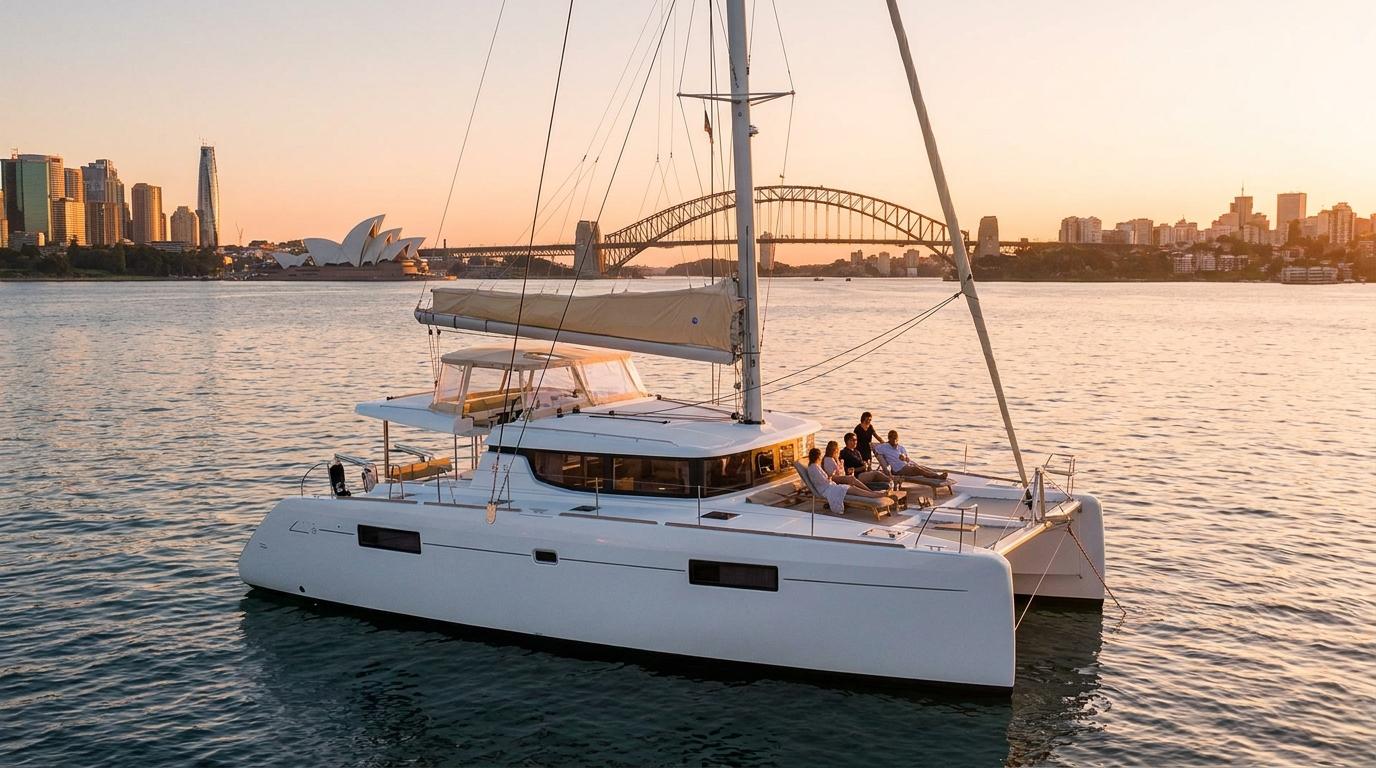
Everything above changes character when you approach it from the harbour instead of the car park. That is not a sales line, it is a function of geography: the harbour was the reason the city is here, and the city was built facing it.
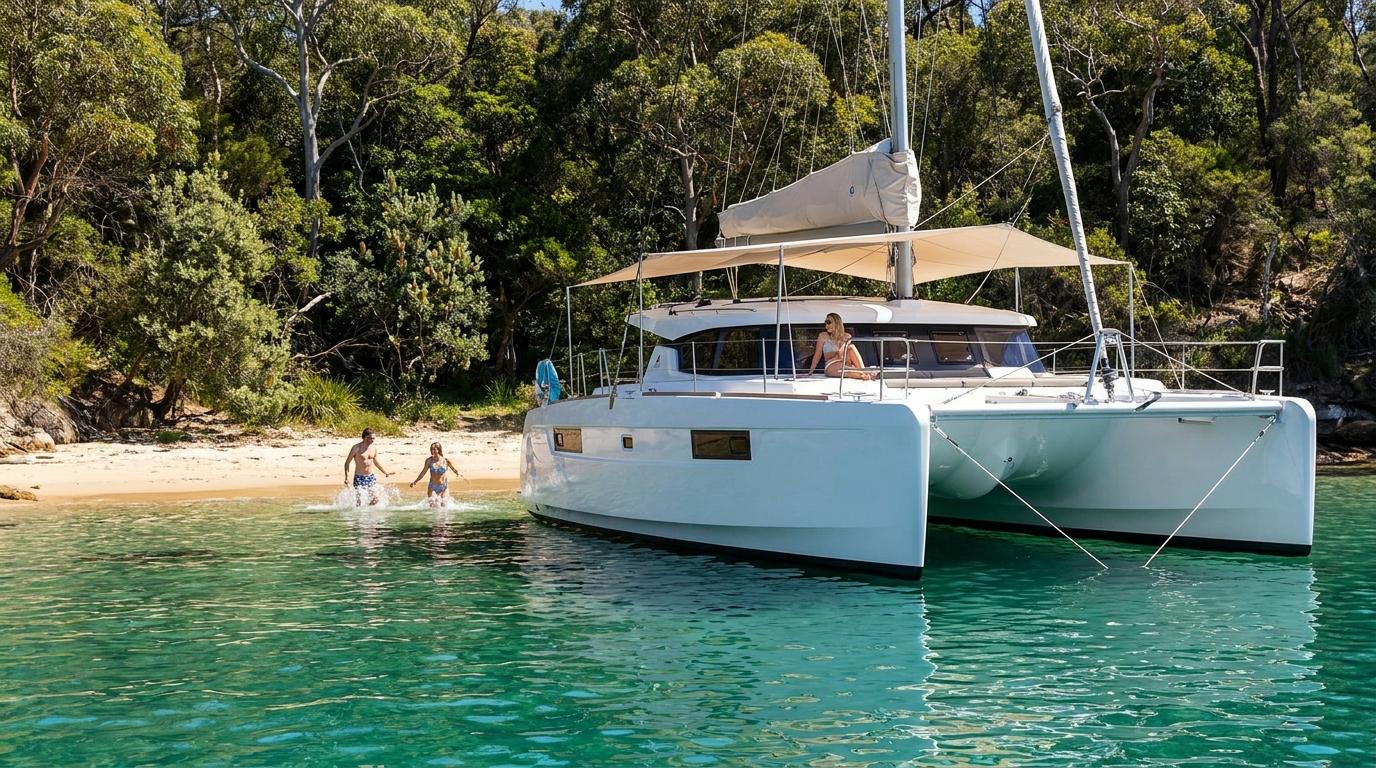
A private charter buys you the parts the timetable cannot reach: anchoring off Store Beach for a swim, sitting in Athol Bay for sunset, circling Fort Denison, running up to Middle Harbour, and stopping wherever the day suggests. Charters run four hours in peak season and three in the shoulder and off season, and every charter comes with a qualified skipper, so nobody needs a licence or any experience. Our catamarans are the ones with the shallow draft that gets you close in at Castle Rock.
A rough shape for a day on the water: head east past the Opera House and Fort Denison, anchor at Shark Island or Athol Bay for a swim and lunch, then work north to Store Beach and Quarantine in the afternoon and be back near the bridge as the light goes. Four hours covers it comfortably.
The Landmarks, Done Properly
You should still see the obvious things. Just see them well.
The Sydney Opera House and the Sydney Harbour Bridge are both better from the water than from the forecourt, and passing directly under the bridge is genuinely something. BridgeClimb is the other way at it, from the top. Taronga Zoo sits on the slope above Athol Bay and the ferry there is half the experience.
The harbour is also the venue for the city’s biggest days. New Year’s Eve needs no explanation. Boxing Day is the Sydney to Hobart start, and watching the fleet head for the heads from a boat on the water is a different event entirely from watching it from a headland. Vivid lights the foreshore through winter, and winter is also when the whales pass the heads on migration.
Wildlife and The Water Itself
People are surprised by how much lives in here. The harbour is one of the most biodiverse harbours in the world, and a day on the water routinely turns up seabirds, rays in the shallows and dolphins, seals, & penguins if you are lucky. Our post on marine life around the harbour goes into what you are likely to see and where.
The harbour is a drowned river valley, which is why it is so deep so close to shore and why the bays are the shape they are. It also means the water is genuinely clean enough to swim in off most of the beaches listed above.
FAQ
What is the best way to see Sydney Harbour?
From the water. A private charter reaches the boat-access beaches, the anchorages and the islands a ferry cannot, and lets you stop where you want rather than where the timetable stops.
Can you visit Fort Denison?
Not at the moment. Fort Denison is closed to visitors while conservation works are completed, and the restaurant has not operated for some years. You can still see it clearly from the water, and circling the island is the best view of the Martello tower available.
Which Sydney Harbour islands can you land on?
Cockatoo Island is open and has ferry access plus overnight accommodation and camping. Shark Island and Clark Island are both open with a landing fee and bookings required, and both allow a boat to drop off and collect but not to moor. Fort Denison is closed. Goat Island is tour access only.
How much does it cost to land on Shark Island?
A $7 per person landing fee applies, booked through National Parks in advance. Annual NSW park passes do not cover it. The island is open sunrise to sunset.
Which Sydney Harbour beaches are best reached by boat?
Store Beach, Quarantine Beach and Collins Beach near North Head are the main three, and Milk Beach and Castle Rock are far easier by water than on foot. They are the quietest beaches in the harbour precisely because there is no road to them.
Do I need a boat licence to hire a boat on Sydney Harbour?
Not on a skippered charter. A qualified skipper runs the boat, so nobody in your group needs a licence or any boating experience, and everyone on board is free to have a drink.
When is the best time of year?
Peak season runs October to March for warm weather and swimming. The shoulder months are quieter on the water and better value, and winter brings whale migration past the heads along with Vivid on the foreshore.
Plan your day on the harbour
Tell us your date and your group size and we will match you to a boat and build the route around the parts you actually want to see. Call 1300 883 023 or send us an enquiry.